 Phonics
Decodable readers
Stories that use only the sounds you’ve taught - built to a systematic synthetic phonics sequence, across eight levels.
Builds decoding confidence

You know this child better than anyone. Now you can hand them a story built around the exact things they love - and the exact way they learn.
Your first 5 books are on us. No card. About two minutes to start.
The personalisation
Create a Topic of Interest - anything a child loves, however specific - and it’s woven through the whole book: the story, the pictures, the details that make them lean in.
“A blue hammer with one missing claw, with the name ‘Daniel’ on the handle.” → It appears in the story, drawn exactly that way. If they can picture it, it goes in the book.

Representative · sample illustration
One child. One book. No two alike.
How it works
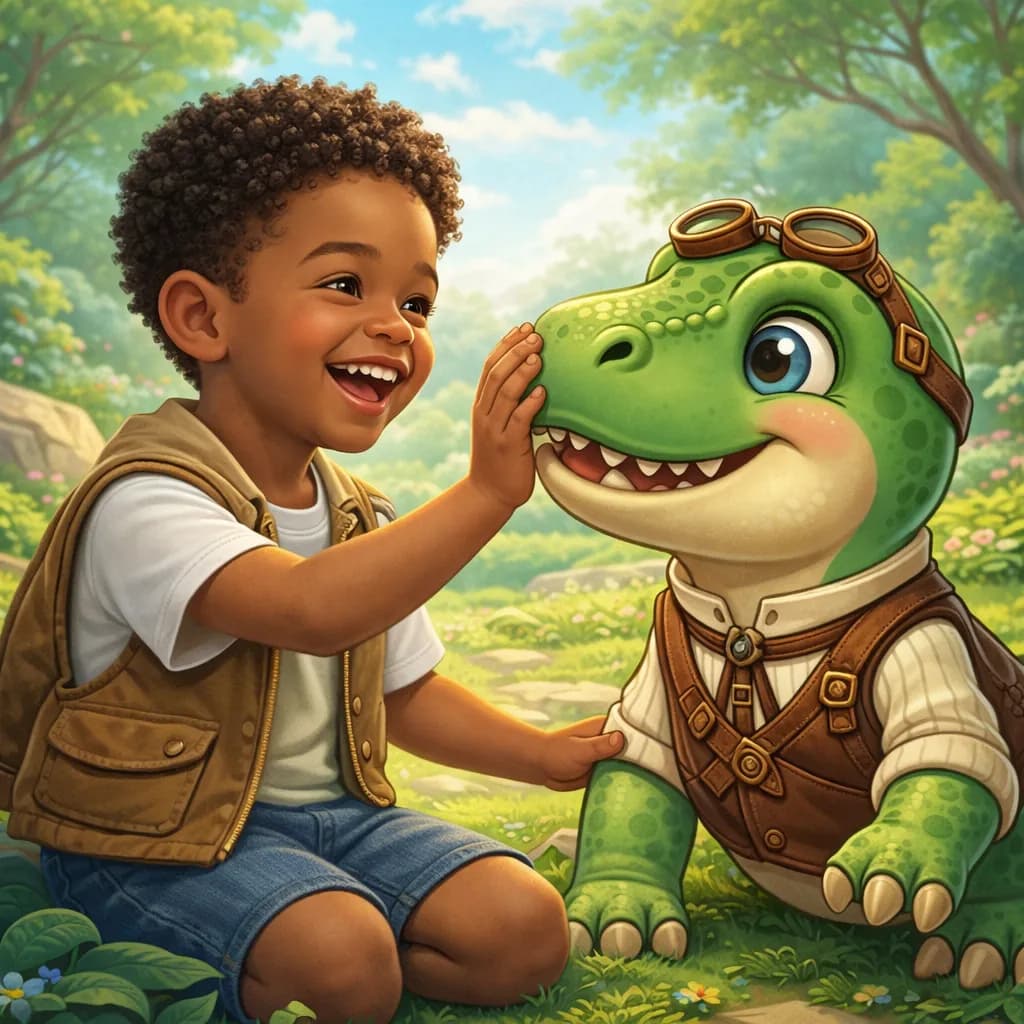
Their name, age, the sounds they’re working on, and the things they love. The more specific you are, the better the book.
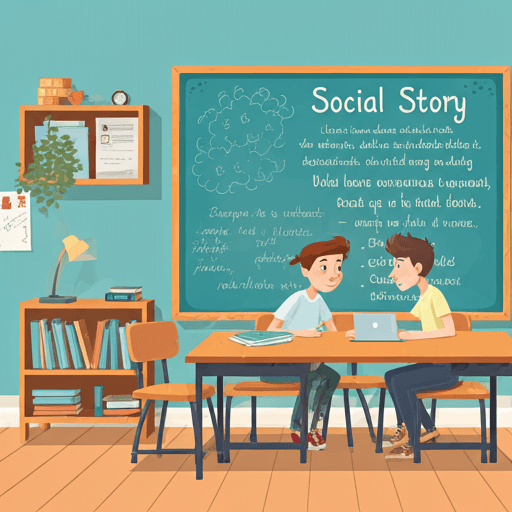
A decodable phonics reader, a Carol Gray social story, or an emotion story - then pick the art style that suits them.
A beautifully illustrated, print-ready book made for this child and no one else. You review every page before they see it.
Three kinds of book
Each book type is designed for a different goal - and every one is built around the reader.
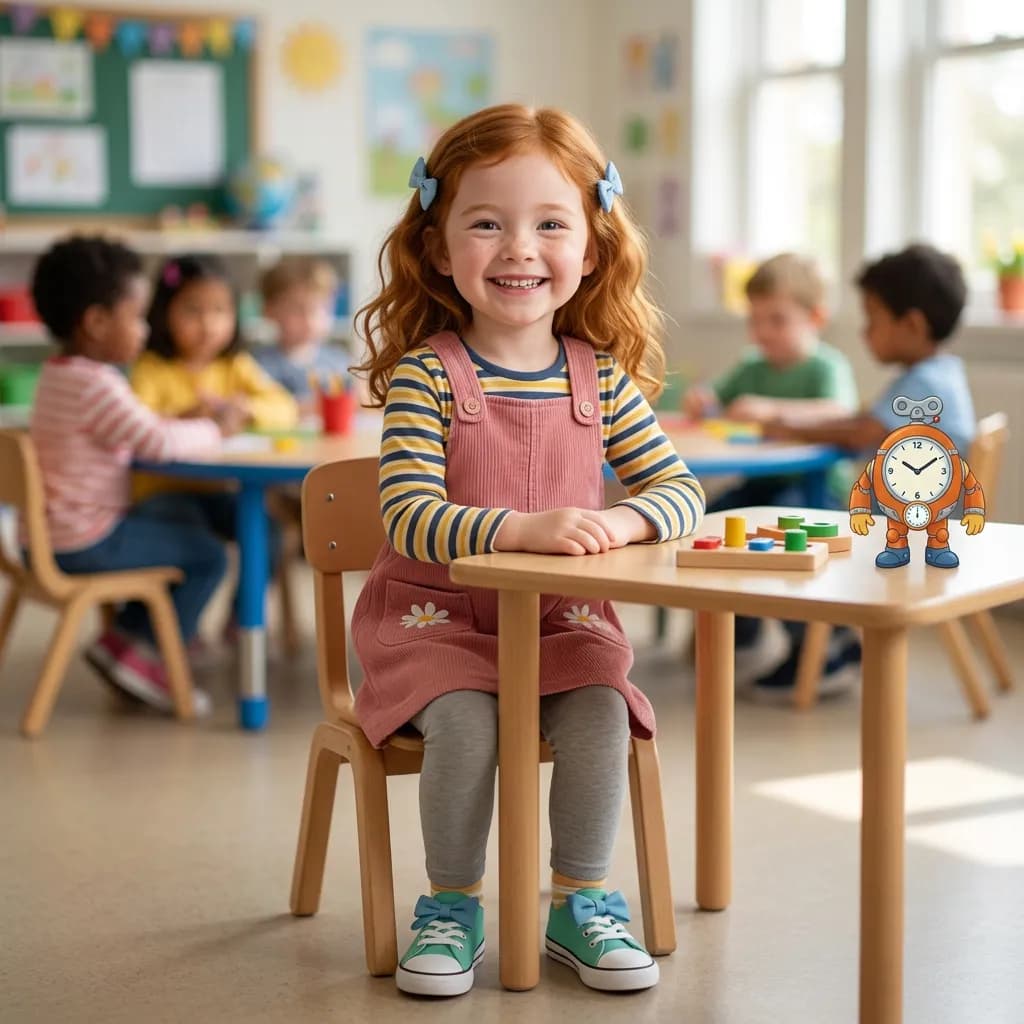
PhonicsStories that use only the sounds you’ve taught - built to a systematic synthetic phonics sequence, across eight levels.
Builds decoding confidence
 Social
Written to Carol Gray’s 10.4 Criteria - the four-to-one descriptive-to-coaching formula, in a calm, reassuring voice.
Eases transitions & new routines
 Emotion
Twenty emotions across three tiers, each one explored through the child’s own world and the things that matter to them.
Builds emotional vocabulary
The evidence
We’re careful with our claims. Here’s what the research actually supports - and where we stop.
Research links embedding a child’s special interests into learning materials with stronger engagement and on-task behaviour for autistic learners.
Gunn & Delafield-Butt, 2016 · Dunst et al., 2012Systematic phonics has one of the strongest evidence bases in education for building decoding and word reading - especially when it starts early.
National Reading Panel, 2000Every social story follows Carol Gray’s 10.4 Criteria - a countable, auditable standard used by speech pathologists and autism educators.
Carol Gray Social Stories 10.4These books support the work you do - they don’t replace your professional judgement, and you review every one before it reaches a child.
Made with SeeMe Learn
Sample illustrations from SeeMe Learn books - every book we generate is shaped by one child’s name, level and interests.
Illustrations are representative sample books produced with SeeMe Learn, not books made for identifiable children.
For support teachers
You already know this learner inside out. Now you can build them a decodable reader or a social story at their exact level, around their exact interests - in minutes, not your Sunday afternoon.
In their words
I made three levelled readers for three different kids in one sitting. That used to take me half a week.
He spotted the digger from his bedroom wall on the cover - and read the whole thing himself.
A social story in the child’s own world - their words, their things - changes how they receive it.
Quotes are representative illustrations of common feedback, not attributed to specific individuals.
Good questions
Your first five books are free, with no credit card. The free trial runs for 7 days from the day you sign up; after that you choose a plan to keep creating. Because we never take a card up front, nothing can auto-charge you - and the books you have already made stay in your library.
A child’s likeness is sensitive biometric data. It’s stored in Australia, encrypted, used only with your explicit consent, never used for advertising, and deleted whenever you ask. A photo is sent to our AI providers in the United States only at the moment of safety screening and illustration generation; we use them on their paid API tiers, whose published terms state that data sent through the API is not used to train their models.
Phonics readers follow a systematic synthetic phonics sequence; social stories follow Carol Gray’s 10.4 Criteria; the interest-led approach is grounded in published research. The books support your practice - they don’t replace your judgement, and you review every one.
It’s built for neurodiverse readers: decodable text for dyslexia and reading delay, Carol Gray social stories for autism, and every book centred on the child’s own interests.
Minutes. Enter the child’s details, choose the book type and style, then review the pages before you print or share.
Not at all. If you can fill in a form and press a button, you can make a book.
No credit card. No learning curve. Just a story that fits - their name, their world, their level - ready in minutes.
Start free - 5 books on usFree trial runs 7 days from sign-up · Made for neurodiverse learners · Data stored in Australia · You review every page